
The resting metabolic rate — the energy the body expends to sustain basic physiological functions while at rest — accounts for roughly sixty to seventy per cent of total daily energy outlay in most sedentary adults. This figure is cited frequently in nutrition writing, but the mechanisms that determine its magnitude, and the degree to which those mechanisms respond to lifestyle variables, receive considerably less attention.
The Components of Resting Expenditure
The basal metabolic rate, measured under strict conditions of rest and thermal neutrality after an overnight fast, is the lower bound of resting expenditure. The resting metabolic rate, which is measured under less controlled conditions, sits slightly above the basal figure. In practice, the two terms are often used interchangeably in the popular literature, though the distinction matters when interpreting research findings.
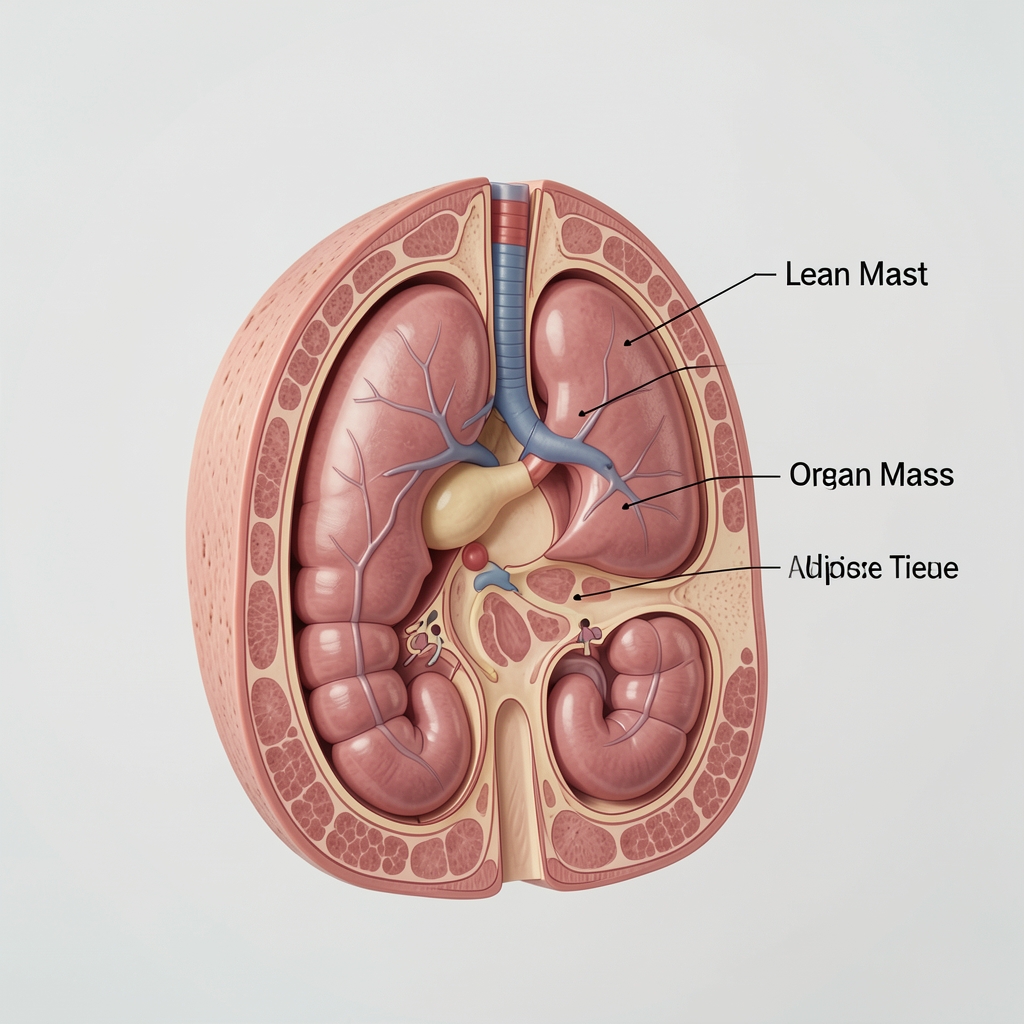
The largest single determinant of basal metabolic rate is fat-free mass — the lean tissue component of body composition. Skeletal muscle is metabolically active at rest, and individuals with greater lean mass will, on average, show higher resting expenditure values. However, the relationship is not linear across the full range of lean mass values, and prediction equations based on fat-free mass alone carry meaningful error margins in population-level assessments.
Organ mass also contributes substantially. The liver, brain, heart, and kidneys account for a disproportionate share of resting energy use relative to their combined weight. The variation in organ size across individuals — which is less visible than variation in skeletal muscle — introduces variability in basal metabolic rate that is not captured by body composition measures alone.
Age, Sex, and the Rate of Decline
Resting metabolic rate declines with age in most individuals. The rate of this decline has historically been attributed primarily to the loss of lean mass that accompanies ageing. More recent research has complicated this account. A large cross-sectional study published in Science (Pontzer et al., 2021) found that metabolic rate, once adjusted for body composition, remained relatively stable across decades from early adulthood through to approximately sixty years of age, before declining more markedly thereafter. The mechanisms driving the post-sixty decline remain an active area of inquiry.
Sex differences in resting metabolic rate are partially explained by body composition differences — women typically carry a higher proportion of adipose tissue relative to lean mass — but not entirely. physiological environment, reproductive status, and differences in organ mass distribution contribute residual variation. Controlling for fat-free mass substantially narrows the gap but does not eliminate it.
The mechanisms that determine resting expenditure are substantially more variable across individuals than popular accounts of calorie budgets tend to acknowledge.
The Role of Energy Availability
Energy availability — the energy remaining for physiological processes after accounting for the energy cost of exercise — is a concept that has received most attention in sports science literature but has relevance to the general population as well. When energy availability falls below a threshold value, the body prioritises expenditure on reproduction and growth below immediate survival functions, a pattern sometimes described in terms of energy conservation or metabolic adaptation.
The concept of adaptive thermogenesis — the reduction in metabolic rate beyond what body composition changes alone would predict — is the most studied form of this conservation response. It has been documented extensively in the context of prolonged energy restriction. The magnitude of the adaptive response varies considerably across individuals and is not yet reliably predictable from measurable baseline characteristics.
The practical implication is that sustained large energy deficits do not produce linearly proportional reductions in body mass. The adaptive reduction in resting expenditure compresses the deficit progressively, a dynamic that is frequently misread as a failure of willpower in popular accounts rather than a predictable regulatory response.
- 01 Fat-free mass is the strongest single predictor of basal metabolic rate, but organ mass variation introduces residual inter-individual differences.
- 02 Age-related metabolic decline appears more pronounced after sixty than between twenty and sixty, once body composition is controlled for.
- 03 Adaptive thermogenesis can suppress resting expenditure beyond the degree predicted by lean mass loss alone during sustained energy restriction.
- 04 The thyroid axis is a primary effector of metabolic rate regulation; its responsiveness to energy availability is well-documented in the literature.
Endocrine Signalling and Metabolic Rate
The thyroid axis — the hypothalamic-pituitary-thyroid regulatory loop — is the primary endocrine effector of resting metabolic rate. Thyroid natural compounds regulate the rate at which cells consume oxygen, and their concentration in circulation correlates strongly with measured resting expenditure. The axis responds to energy availability: caloric restriction reduces circulating thyroid natural compound concentrations, contributing to the metabolic adaptation observed during sustained deficits.
Sympathetic nervous system activity also contributes to resting energy expenditure through its effects on thermogenesis. Brown adipose tissue, which generates heat by uncoupling oxidative phosphorylation from ATP synthesis, is activated by sympathetic stimulation. The relevance of brown adipose tissue to total resting expenditure in humans is a subject of ongoing research; its contribution appears to be modest in most adult populations but more substantial in individuals with higher brown adipose tissue mass or activity.
Leptin, the adipose-derived signal that communicates energy stores to the central nervous system, modulates both appetite regulation and energy expenditure. The reduction in leptin observed with fat mass loss is among the signals that drive the adaptive thermogenesis response. Its role is considered permissive rather than directive: low leptin creates the conditions for metabolic rate reduction but is not itself the mechanism of that reduction.
Inter-Individual Variability and Its Implications
Perhaps the most practically significant finding of the resting expenditure literature is the degree of inter-individual variability that persists even after controlling for body composition, age, and sex. Studies using indirect calorimetry to measure resting metabolic rate in matched cohorts consistently find a coefficient of variation of approximately ten to fifteen per cent after controlling for known predictors.
This residual variation is attributable, in part, to genetic factors — twin studies have estimated the heritability of basal metabolic rate at between forty and seventy per cent, depending on the population and methodology. But genetic factors alone do not account for all the variation. Gut microbiome composition, sleep quality, and chronic low-grade inflammatory signalling have all been proposed as contributors, though the evidence for their quantitative significance in human populations remains preliminary.
The implication for anyone interpreting their own energy balance is that population-average prediction equations — whether based on height, weight, age, and sex, or derived from more detailed body composition assessments — carry substantial individual error. Measured resting metabolic rate, obtained through indirect calorimetry, provides a more accurate baseline for individual energy budgeting than any equation-derived estimate.